As warmer weather settles in, many people look for small but meaningful upgrades that make everyday life easier, healthier, and more enjoyable. From simplifying brunch with a clever quiche shortcut to rethinking home design, lunch packing, and outdoor living, a wave of practical ideas is reshaping how we cook, decorate, and relax at home.
A New Take on Quiche: Potato Crust Instead of Pastry
Traditional quiche relies on a classic pastry crust, but for busy home cooks and those avoiding refined flour, pie dough can be more hassle than it is worth. A rising alternative replaces the standard crust with thinly sliced potatoes, creating a sturdy, naturally gluten-free base that is easier to prepare and arguably more flavorful.
Why a Potato Crust Works
The concept is straightforward: layers of potatoes are pressed into a pie dish or baking pan to form a crust, then partially baked before the egg mixture is added. As the quiche bakes, the potatoes crisp along the edges and become tender underneath, supporting the rich filling without the fuss of rolling dough.
- Less technique required: No chilling, rolling, or blind-baking pastry shells.
- Gluten-free by default: Ideal for those avoiding wheat without needing specialty flours.
- Flavor boost: Potatoes absorb butter, herbs, and seasoning, adding depth to every slice.
- Textural contrast: Crispy edges meet a soft, custardy interior in each bite.
To build the crust, potatoes are usually sliced thinly—either with a sharp knife or, for more consistent results, a mandoline. The slices can be tossed with oil or melted butter, salt, pepper, and optional spices like smoked paprika or garlic powder, then overlapped in concentric circles along the bottom and up the sides of the dish. Pre-baking helps set the layers and ensures the potatoes are cooked through by the time the filling is set.
Customizing the Filling
A potato crust quiche can accommodate nearly any filling combination. Classic choices include sautéed spinach, mushrooms, caramelized onions, cheese, and bits of cooked bacon or ham. Lighter takes might lean on roasted vegetables and fresh herbs, making the dish feel more seasonal and vegetable-forward.
Because potatoes are naturally hearty, they pair well with both bold flavors and creamy components. Sharp cheeses like cheddar or Gruyère stand up to the richness of the eggs, while tangier varieties, such as goat cheese or feta, cut through the density and keep the dish bright.
For hosts and meal-preppers, the potato-crusted version has another advantage: it holds up well at room temperature. That makes it suitable for brunch buffets, picnics, or make-ahead weekday lunches that can be eaten warm or chilled without losing their appeal.
Refining a Builder-Grade Home with Thoughtful Design
In interiors, the same spirit of practical refinement is transforming builder-grade houses into distinctive, layered homes. Rather than gutting spaces and starting from scratch, some designers are embracing what already exists and elevating it through color, layout, and tailored built-ins.
Balancing Clashing Styles
One recent project in Ohio illustrates this approach. The home started out as a fairly standard build, with finishes that felt generic and disconnected from the owners’ personalities. The designer’s task was not demolition but nuance: blend two seemingly conflicting styles into a cohesive, comfortable space.
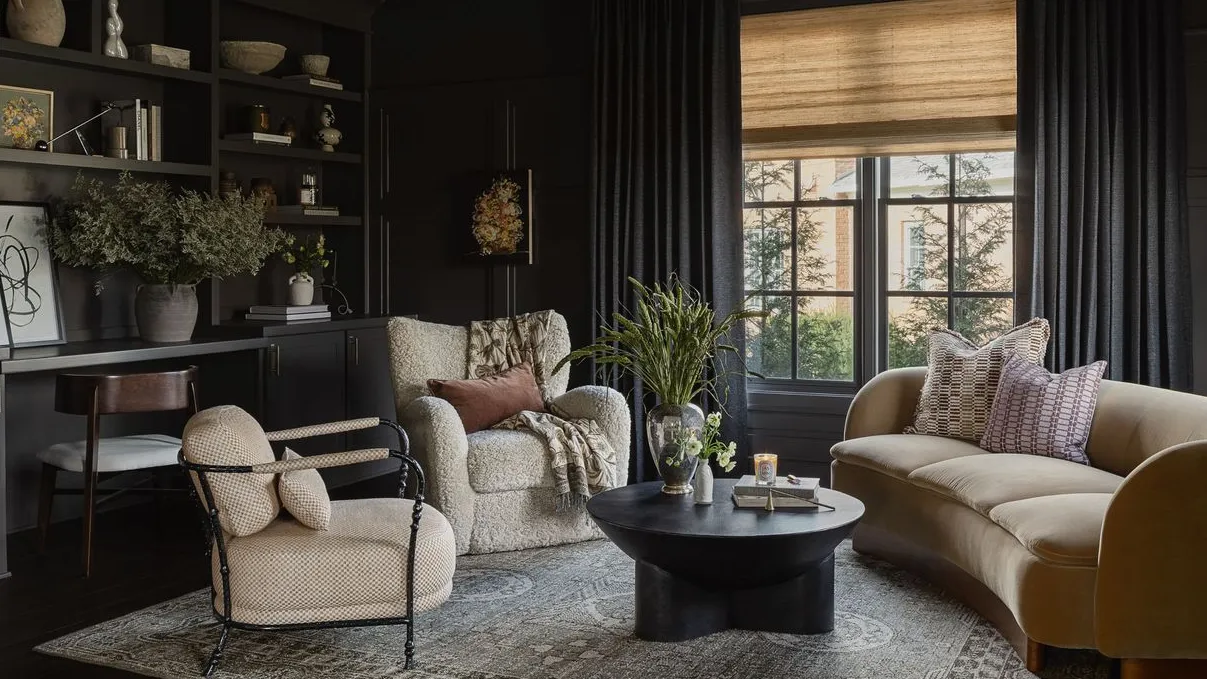
A key example is a snug, charcoal-painted room that functions as both lounge and workspace. Deep wall color wraps the space, creating a cocooning effect. A curved sofa softens the strong lines of the architecture, while two neutral armchairs and a patterned rug keep the room from feeling too austere. A black coffee table grounds the seating area, and a wall of built-in shelving and a desk introduces function without sacrificing style.
This room demonstrates how darker color palettes can be inviting rather than oppressive when balanced with texture and contrast. The curvature of the sofa and the layering of textiles offset the intensity of the paint, while the integrated desk and bookcase maximize use of a relatively compact space.
Refine, Don’t Replace
The broader philosophy behind the redesign emphasizes refinement over replacement. Rather than ripping out existing elements, the designer focused on:
- Reworking color schemes to add depth and mood without major structural changes.
- Introducing built-ins to add storage and bespoke character to otherwise plain rooms.
- Mixing silhouettes—curved furniture with sharper architectural lines—to keep spaces dynamic.
- Layering materials like wood, metal, and textiles to give rooms a collected, lived-in feel.
This more restrained, strategic approach aligns with a broader movement in home design: making the most of what you have, upgrading thoughtfully, and investing in details that add both function and personality. It is a form of sustainable design, minimizing waste and focusing on changes that deliver long-term value.
The Rise of the Adult Lunchbox: Stainless Steel Takes Center Stage
In the kitchen and on the go, another subtle shift is occurring as more adults trade flimsy plastic baggies and disposable containers for durable, non-toxic lunch solutions. Stainless steel bento-style lunchboxes, once associated primarily with children’s meals or specialized camping gear, are becoming an everyday staple for office workers and commuters.
Why Stainless Steel Is Replacing Plastic
Several factors are driving the move toward stainless steel lunchboxes:
- Durability: Steel containers resist cracks, warping, and staining, compared with plastic options that often need frequent replacement.
- Safety: High-quality stainless steel is free from common plastic additives and coatings that some consumers wish to avoid.
- Temperature performance: Many models keep foods cooler for longer when used with insulated bags or ice packs.
- Reduced waste: Reusable compartments dramatically cut down on single-use baggies, wraps, and takeout containers.
Designers of these lunchboxes have also focused on aesthetics. Sleek finishes, slim silhouettes, and modular compartments target adults who want something that looks polished in a workplace setting but still supports varied, balanced meals.
Making Meal Prep More Practical
Bento-style layouts naturally encourage portion control and variety. Separate sections can hold salads, grains, proteins, and snacks without mixing until mealtime. For those looking to eat healthier or reduce food costs by cooking at home, a well-designed lunchbox can make the routine of packing meals feel more manageable and even enjoyable.
Combined with recipes like potato-crusted quiche that travel and reheat well, these containers offer a practical path to better daily eating habits, whether at the office, on campus, or on the road.
Last-Minute Patio Furniture Deals as Outdoor Season Begins
As days lengthen, attention turns to outdoor spaces. Patios, balconies, and small yards can quickly become extensions of the home, and retailers are catering to this with aggressive seasonal discounts, particularly during large events such as Amazon’s Big Spring Sale. In the final hours of these promotions, shoppers often find notable markdowns on essentials that define outdoor living.
Key Categories Worth Watching
Among the most sought-after items are pieces that maximize comfort and usability in limited space:
- Outdoor sofas and sectionals: Turn a bare patio into a lounge area suitable for reading, hosting friends, or napping in the sun.
- Dining sets: Compact tables and chairs make it practical to enjoy meals outside, even on smaller balconies.
- Umbrellas and shade solutions: Freestanding umbrellas and shade sails extend the usable hours of outdoor spaces by offering protection from midday sun.
- Accent pieces: Side tables, ottomans, and outdoor rugs complete the space and add comfort at relatively low cost.
With prices in some categories starting around the cost of a single restaurant meal, these late-stage discounts can be an accessible way to upgrade an otherwise underused area. For renters and homeowners alike, investing in a few key pieces can change how often they choose to spend time outdoors.
Designing a Cohesive Outdoor Room
The most effective patio makeovers follow principles similar to indoor design. A clear layout, a defined color palette, and layered textures can make even a modest balcony feel intentional. Prioritizing comfort—through cushions, shade, and appropriate seating height—encourages longer, more frequent use.
When combined with easy make-ahead recipes and portable containers, an upgraded outdoor space can become a daily retreat for coffee, remote work, or evening meals, rather than a seasonal afterthought.
Everyday Living, Thoughtfully Upgraded
Across the kitchen, the home office, the lunch routine, and the patio, a common thread emerges: people are looking for upgrades that reduce friction without demanding a full lifestyle overhaul. A quiche with a potato crust removes the hurdle of pastry; a once-generic home is transformed through color and built-ins instead of demolition; a sturdy stainless steel lunchbox replaces disposable packaging; and a few discounted patio pieces turn unused outdoor square footage into a functional room.
Taken together, these shifts show that thoughtful design does not always require grand gestures. Small, well-chosen changes—whether in what we cook, how we furnish, or where we spend our time—can significantly improve everyday life.