You know that moment when your yard starts bossing you around? The mower needs gas, the patchy lawn needs reseeding, the shaded corner never fills in, and suddenly your “easy” outdoor space feels like another room you have to clean. That is exactly why low-effort landscaping is having a moment, and why so many homeowners are comparing traditional grass with alternatives like Irish moss, rock features, and even indoor greenery that skips soil entirely.
If your real goal is a home that looks polished without adding more chores, this is not just a gardening decision. It is an organization decision too. The best landscape choices reduce maintenance, cut visual clutter, and create a calmer backdrop for everyday life. And right now, the smartest comparison is not simply lawn versus no lawn. It is which low-fuss option actually fits your space, your style, and your tolerance for upkeep.
Why this landscaping shift matters for organized living
People often separate interiors from exteriors, but they should not. A chaotic yard has a way of spilling into your home life: muddy shoes at the door, bulky lawn gear in the garage, half-used seed bags on a shelf, hoses draped where they do not belong. A simpler landscape can mean fewer tools, fewer seasonal purchases, and less visual noise overall.
That is why three trends are colliding right now:
- Irish moss lawns for a softer, low-growing ground cover look
- Large rocks and boulders as durable, low-maintenance landscape anchors
- Soil-free houseplants indoors for greenery without bags of potting mix and constant cleanup
There is also a design lesson worth borrowing from quiet-luxury interiors: character does not come from stuffing a space with features. It comes from restraint, texture, and materials that feel intentional. The same rule works outside.
The quick comparison: Irish moss, grass, rocks, or soil-free plants?
| Option | Best For | Maintenance Level | Water Needs | Foot Traffic Tolerance | Style Effect | Main Trade-Off |
|---|---|---|---|---|---|---|
| Irish moss | Small lawns, decorative ground cover, soft cottage-style areas | Low to moderate | Moderate, especially while establishing | Light | Lush, romantic, textured | Not ideal for heavy play or constant trampling |
| Traditional grass | Active households, play areas, larger multipurpose yards | High | Moderate to high | High | Classic, uniform | Frequent mowing, edging, patching, and feeding |
| Large rocks/boulders | Slopes, borders, focal points, dry landscapes | Low | Very low once installed | Not a surface, but highly durable as structure | Architectural, grounded, sculptural | Upfront placement takes planning and effort |
| Soil-free houseplants | Indoor greenery, small-space living, low-mess plant care | Low | Low to moderate depending on plant type | Indoor use only | Clean, modern, airy | Not a yard solution, but supports the same low-maintenance mindset |
Irish moss vs grass: the real decision most homeowners are making
Choose Irish moss if you want softness without the mowing routine
Irish moss is getting attention for one big reason: it gives you that green-carpet effect without looking like a standard lawn. It stays low, can handle a bit of shade better than many grasses, and has a more decorative look than turf. In the right spot, it feels almost styled rather than merely maintained.
That makes it especially appealing for homeowners who want a yard that reads as curated and calm. If you are tired of chasing a perfect lawn, Irish moss can feel like stepping off the maintenance treadmill.
But here is the catch. It is not a direct substitute for a family soccer field. It works best where foot traffic is light and the goal is visual softness, not durability under constant wear. Think front paths, small courtyard zones, spaces between stepping stones, or compact yards where aesthetics matter more than rough use.
Choose grass if your yard needs to perform, not just look pretty
Grass still wins when the yard is a workhorse. Kids run on it. Dogs sprawl on it. Chairs can be dragged over it. If your outdoor space doubles as recreation space, grass remains the practical pick.
That said, practicality has a cost. Mowing, edging, watering, fertilizing, reseeding, and dealing with thin or brown spots all add up. Grass often looks simple from a distance and demanding up close. If you already feel stretched managing your home, ask yourself: do you really want your yard to behave like another room with constant upkeep?
The smartest compromise
For many homes, the best answer is not choosing one surface for the entire yard. It is zoning. Use grass only where you need durable activity space. Use Irish moss in decorative areas and around paths. Bring in rocks where you want permanent structure and less maintenance. That layered approach usually looks more designed and works harder long term.
Where big rocks beat both grass and ground cover
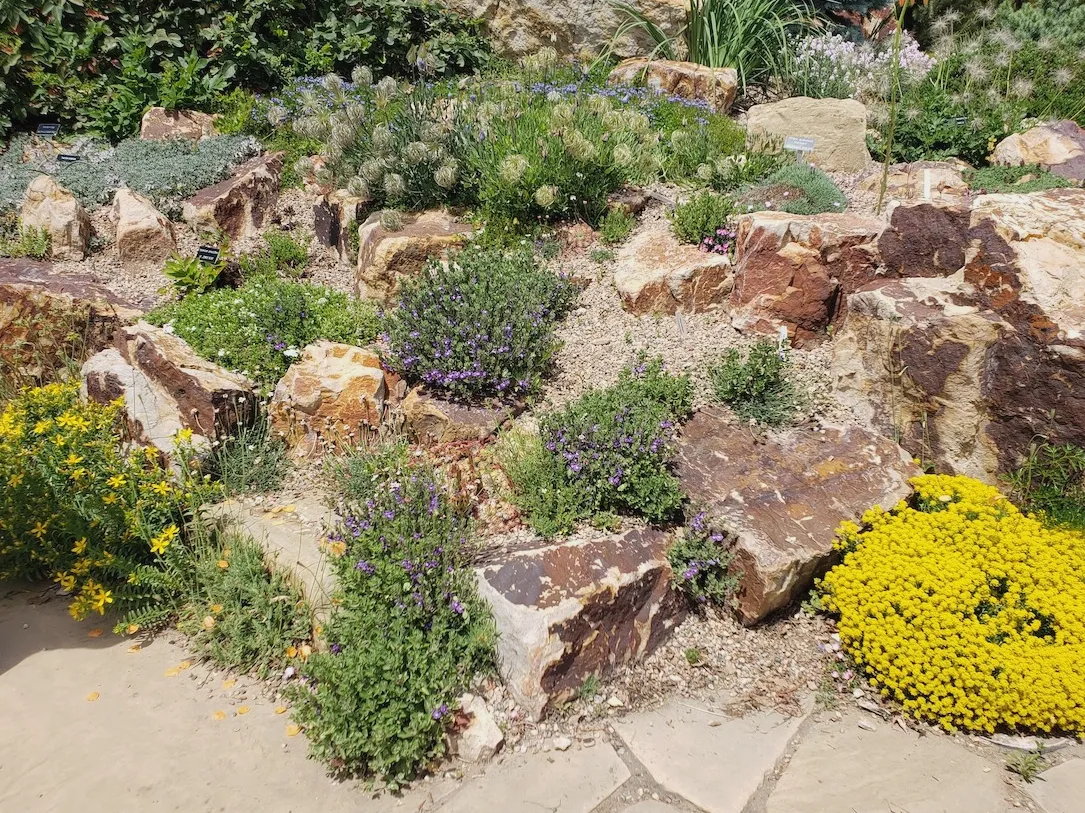
Large rocks are one of the most overlooked tools in low-maintenance home landscape design. They are durable, timeless, and once set properly, they largely stay put and keep doing their job. No mowing. No seasonal dieback. No replacing mulch every few months because it migrated after rain.
A seasoned gardener will tell you that rocks do more than fill space. They create visual order. They can anchor a bed, frame a plant grouping, stabilize a gentle slope, or act as a backdrop that makes even ordinary greenery look intentional.
Use them when you need:
- Structure in a yard that feels flat or undefined
- Erosion support on a slope or terrace edge
- A focal point that replaces fussy seasonal plantings
- A local, natural material palette that feels connected to your region
Here is the design trick many people miss: one well-placed boulder often looks better than a scattered collection of medium-size rocks. Why? Because random placement can read as leftover debris, while a single substantial stone feels deliberate. Groupings can work too, especially in odd numbers, but only if they look composed rather than dumped.
And if you care about sustainability, locally sourced stone often makes more sense than synthetic landscape materials that weather poorly or need replacing. Stone ages well. Plastic edging does not.
Indoor comparison: why soil-free plants belong in the same conversation
At first glance, a yard trend and a houseplant trend seem unrelated. They are not. Both are responses to the same pressure: people want greenery without a mess-heavy care routine.
Soil-free houseplants, including options like air plants and other low-fuss varieties, appeal because they reduce one of the biggest barriers to indoor plant ownership: the cleanup. No spilled potting mix. No bulky bags stored in a utility closet. No muddy repotting session taking over the kitchen table.
That matters in smaller homes and apartments where every maintenance category competes for storage space. If your home is already stuffed with extra supplies, simplifying plant care can make a noticeable difference.
💡 Pro Tip: If you are streamlining the way your home functions room by room, practical systems like drawer organizers help contain all the small maintenance items that tend to multiply, from pruning scissors to plant labels and gloves.
The bigger point? Whether you are styling a windowsill or a front yard, low-effort greenery works best when it does not create hidden clutter.
Style matters too: the quiet-luxury lesson homeowners should steal
One of the strongest design stories right now is the return of character through restraint. In interiors, that can mean layered neutrals, tactile materials, tailored details, and a sense of calm instead of over-decoration. Outside, the same principle translates beautifully.
Irish moss brings softness and texture. Rocks bring permanence and weight. A controlled plant palette keeps everything from looking chaotic. Together, they create a yard that feels expensive even if the materials are simple.
That is the difference between a yard filled with disconnected ideas and one that feels edited. Quiet luxury outdoors is not about lavish spending. It is about choosing fewer, better elements and letting them breathe.
A practical formula that works
- Use one soft ground layer, such as Irish moss, in decorative zones
- Add one structural hard element, such as a large rock or stone grouping
- Repeat one restrained color story in plants, pots, or trim
- Avoid packing every bed with tiny features that require separate maintenance
That formula is especially useful if your home already leans classic, minimal, or softly traditional.
Which option fits your home best?
Pick Irish moss if…
- You have a small yard or a decorative section of lawn
- You want a softer, more styled alternative to turf
- Your foot traffic is light
- You are happy to give it some attention while it establishes
Pick grass if…
- You need a durable outdoor play surface
- Your household uses the yard heavily
- You do not mind regular maintenance or already have the tools
- Uniformity matters more than ornamental texture
Pick big rocks if…
- You want the lowest long-term maintenance option
- Your yard needs shape, slope support, or a focal point
- You prefer a natural, grounded look
- You are trying to reduce watering demands
Pick soil-free plants indoors if…
- You want greenery without potting mess
- You live in a small space
- You are building a lower-clutter care routine
- You want plants that are easier to manage visually and practically
The hidden cost to compare: storage
Most buyer guides stop at watering and maintenance. But storage should be part of your decision. Grass often requires the biggest support system: mower, fuel, seed, fertilizer, spreader, hose accessories, edging tools. Irish moss and rock-forward landscaping can seriously shrink that list.
If your garage, mudroom, or shed is already overloaded, choosing a lower-maintenance landscape can free up physical and mental space. That is not a small benefit. It is one of the clearest ways exterior design affects interior organization.
Recommended Resource: If your entry, utility zone, or mudroom is carrying the overflow from outdoor upkeep, smart closet organizers can help corral seasonal gear so your simplified landscape actually leads to a simpler home.
The best low-maintenance setup for most homes
If you want the most realistic answer, here it is: very few homes benefit from replacing everything with one material. The best setup is usually a mix.
- Keep grass only where you need durability. Be honest about the square footage you actually use.
- Use Irish moss in visible, lower-traffic zones. This is where it delivers the most beauty for the least frustration.
- Add one or two large rocks for structure. They make the whole yard feel composed and reduce the need for extra filler.
- Bring the same low-mess philosophy indoors. Choose easy-care plants that do not create maintenance clutter.
That combination gives you the soft trend factor, the grounded permanence, and the practical ease people are really chasing right now.
The takeaway is simple: if your yard feels like one more thing to manage, stop treating grass as the default. Compare it honestly against Irish moss, hard-working rocks, and a lower-clutter planting strategy. The most organized home is not the one with the most features. It is the one where every feature earns its keep.