The easiest way to make a room feel more expensive right now is not buying a giant statement sofa or repainting every wall. It is layering the pieces you already use every day—bedding, throws, rugs, benches, and even outdoor furniture—so they do double duty. The surprise is that this is not just a style move. It is becoming a storage and organization strategy too. If your bedroom feels flat, your patio looks like a scattering of unrelated chairs, or your living room still has that one lonely rug that never quite pulls the space together, the new design direction is clear: choose pieces that add softness, structure, and function at the same time.
The shift away from one-purpose decor
Several home trends are converging at once. Bedding is getting more romantic and vintage-looking, but shoppers are becoming more cautious about actual secondhand linens because of hygiene and pest concerns. Throws are no longer just winter extras; they are year-round styling tools in lighter seasonal colors. Rugs are trending more personal too, with shoppers mixing vintage-style finds and custom options instead of defaulting to one big-box neutral. Outdoors, the change is even more dramatic: furniture is being rethought as layout-building architecture rather than a set of separate objects.
That is why built-in planters, hidden cooler tables, storage-minded benches, and corner seating arrangements are getting so much attention. They replace clutter with intention. Inside the home, the same logic applies. A ruched duvet, a quilted floral coverlet, and a patterned rug do more than make a room prettier—they visually organize the room by giving the bed, floor, and seating zones stronger definition. Good styling reduces visual noise. Great styling also reduces the number of extra things you need.
“The most successful rooms now are not minimal in a cold way; they are edited. Every layer has a job, whether that is warmth, texture, zoning, or hidden storage.”
Why vintage-inspired bedding is winning over actual thrifted linen
If you love the look of heirloom bedding but hesitate at the idea of bringing home old sheets, you are not alone. Designers have long warned that thrifted bed linen can carry musty odors, degraded fibers, or in the worst cases, pests. That warning is pushing shoppers toward a smarter compromise: new bedding with vintage cues. Think floral quilting, scalloped edges, ruffles, washed cotton, ruched surfaces, and soft faded tones that mimic age without the risk.
This matters from an organization perspective more than people realize. Bedding occupies a huge amount of visual real estate in a bedroom, often more than any other object. If your bed looks intentional, the whole room looks tidier—even before you organize a single drawer. That is cause and effect, not magic. Pattern and texture can disguise slight everyday rumpling, while layered neutrals and small-scale florals make a bed feel finished without needing six decorative pillows you have to throw on the floor every night. If you want the vintage mood without the maintenance burden, limit yourself to three core layers: fitted sheet, substantial duvet or coverlet, and one accent throw at the foot of the bed. Any more, and you risk creating laundry, not luxury.
A practical rule designers use: if a top layer does not earn its place in either comfort or appearance, it is clutter. That same mindset works beyond the bed. The best closet organizers also follow this principle—every piece should either improve access, reduce mess, or make the space easier to maintain.
“People often confuse abundance with comfort. Real comfort comes from layers you will actually use, not decorative excess that ends up living on a chair.”
Outdoor furniture is starting to behave like storage
The most useful home trend in this mix may be happening outside. Patio furniture for 2026 is moving away from isolated pieces and toward hybrid builds: benches with planter ends, side tables with hidden cooler inserts, corner seating with integrated surfaces, even pallet or cinder block designs that create clear boundaries in small yards. Why does this matter if you care about organization? Because outdoor spaces have historically been full of “temporary” objects—extra stools, random tables, loose pots, toy bins, drink tubs—that never quite find a permanent home.
Smarter builds solve that. A bench with built-in planters eliminates the need for separate stands. A corner bench with a central table reduces the sprawl of movable furniture. A hidden cooler table removes the need for a bulky plastic chest sitting awkwardly beside your seating. The best layouts make a patio feel finished because the storage and the seating are integrated into one visual system. You are not just adding furniture; you are replacing loose pieces with anchored ones.
The small-space lesson to steal indoors
Even if you do not have a patio project planned, the principle is worth borrowing. Look around your home and ask: where am I using three separate objects when one smarter piece would do? An upholstered storage bench in an entry. A coffee table with concealed compartments. A bed with drawers instead of under-bed bins that migrate. A dining banquette that defines the room and hides seasonal linens. This is the same idea that makes compact outdoor furniture feel so current. It cuts visual drift.
Color, softness, and structure are replacing flat minimalism
Another reason this layered trend feels fresh is that it is not beige-on-beige sameness. Some of the strongest interiors gaining attention right now use color very deliberately, not as decoration but as spatial definition. A blue divider in an open-plan apartment, a red door framing a view, a yellow accent shaping how the eye moves—these choices create order without adding walls. Rugs and textiles can do the same thing in a more accessible way.
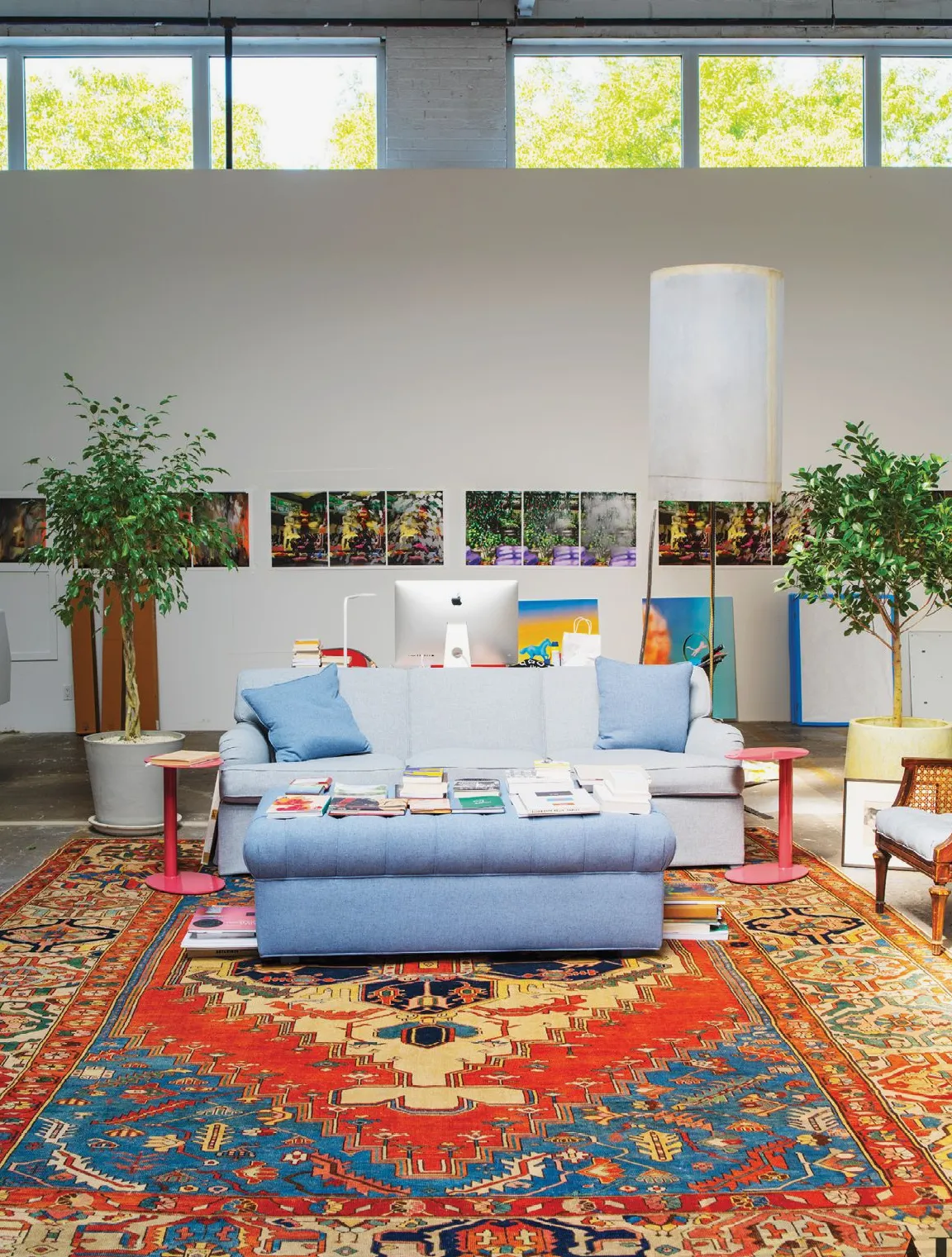
A custom or vintage-style rug, for example, can separate a reading area from a dining zone in a small apartment far better than another shelving unit would. A spring throw in a lighter color can soften a dark chair and signal a seasonal reset without buying new furniture. This is why viral blankets and artisan rugs keep surfacing in design conversations: they are relatively low-commitment ways to change mood and improve coherence. One rug can anchor floating furniture. One blanket can make a sparse bed or sofa feel intentional. One textile decision can save you from adding a whole extra side table just to “fill” an empty corner that did not need furniture in the first place.
If your home feels unfinished, resist the urge to shop for more categories of items. Start by improving the layers in the categories you already have. Flooring, bedding, and seating usually give the fastest return.
How to build a layered room that stays organized
The risk with any trend built on texture and collecting is obvious: layering can tip into clutter fast. So the winning formula is selective layering, not endless accessorizing. Use this filter when you shop or restyle:
- Anchor first: choose one rug or one furniture arrangement that defines the zone.
- Add one tactile bedding or throw upgrade: washed cotton, quilted floral, or a lightweight blanket with visible texture works better than a stack of flat basics.
- Prioritize hidden utility: benches, tables, and seating should earn bonus points if they store, contain, or define space.
- Keep the palette controlled: two to three main tones plus one accent is usually enough, especially if your textiles already bring pattern.
- Edit the extras: if a pillow, side table, basket, or planter has no clear role, remove it for a week and see if you miss it.
One expert-level trick: when you are mixing bedding, rugs, and throws, vary the scale of pattern rather than matching everything. A tiny floral sheet, a medium-scale rug motif, and a mostly solid throw with texture will feel collected instead of chaotic. Matching sets often flatten a room; varied layers give it depth while still reading organized.
The bigger story here is not that homes are getting fancier. They are getting smarter. People still want softness, charm, and personality, but they also want pieces that solve something: a hygiene concern, a storage problem, a layout issue, a seasonal refresh. That is why vintage-inspired linens are outperforming risky thrifted ones, why hybrid outdoor furniture is replacing scattered patio pieces, and why rugs and blankets are being used as room-shaping tools rather than last-minute accessories. If you want your space to look richer without becoming harder to manage, that is your roadmap: fewer random pieces, more purposeful layers.