You heat the pan, add oil, wait for that dramatic sizzle—and somehow dinner still sticks, burns, or turns patchy. Then the potatoes come out browned in spots but not truly crisp, while your kitchen still feels visually off because the room itself is fighting you. Annoying? Very. The surprising part is that these problems often come down to a few small choices: the wrong oil, the wrong burner setup, and a kitchen design mindset that treats function and style as separate things.
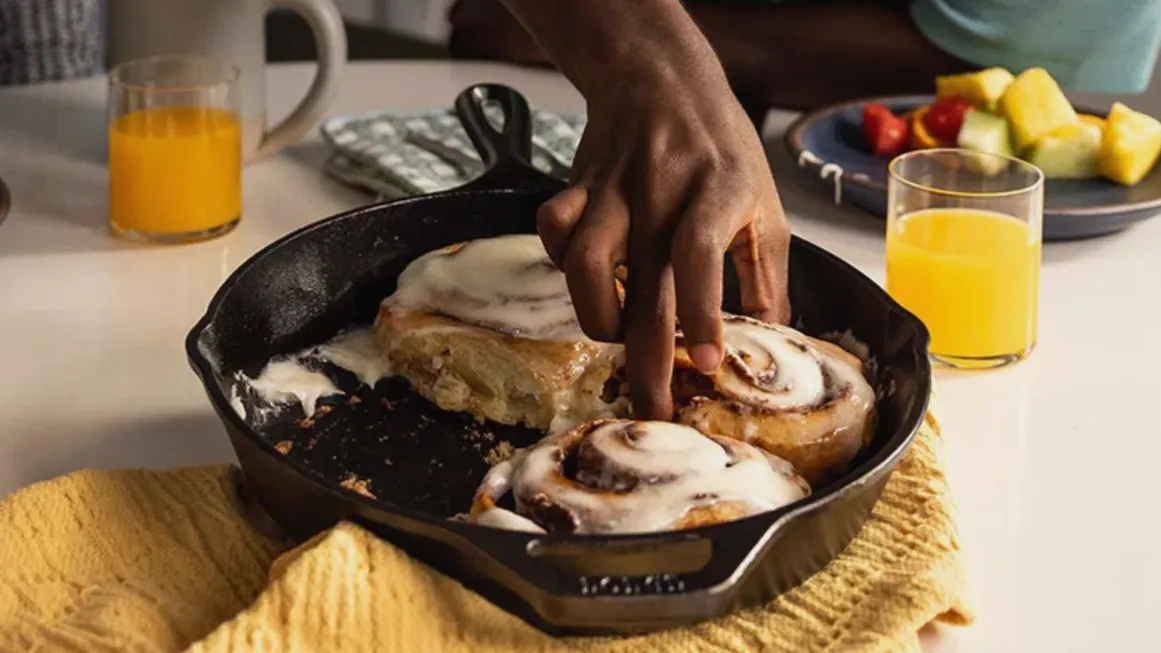
Right now, the kitchen conversation is moving in two directions at once: better cooking performance and warmer, more natural-looking design. That means practical upgrades matter more than ever, whether you’re rescuing a cast iron skillet, trying a smarter roasting trick, or rethinking a black-and-brown palette around an island. If you want a kitchen that works harder and looks more considered, these are the questions worth asking.
Why does cast iron fail even when you think you’re using it correctly?
The biggest cast iron frustration is that people blame the pan when the setup is really the issue. Cast iron is heavy, slow to heat, and excellent at retaining heat—but that doesn’t mean it heats evenly in an instant. If you place it over a burner ring and crank the heat, you create a hot center before the rest of the surface catches up. That “heat ring” effect is a major reason food sticks in one spot and scorches in another.
The fix is simple, but not always intuitive: preheat longer and lower. Give the pan several minutes over medium or medium-low heat so the whole cooking surface can warm more evenly. Then add your fat and wait until it looks fluid and lightly shimmering instead of aggressively smoking. A ripping-hot center with cool outer edges is not good searing—it’s uneven cooking disguised as confidence.
There’s also a seasoning misconception that causes trouble. Many home cooks reach for oils they already keep on the counter, especially olive oil, without thinking about smoke point or polymerization. For seasoning cast iron, low smoke point oils can become tacky, uneven, or more likely to burn before they build that durable finish you actually want.
The better approach: use a higher smoke point oil for seasoning and apply far less than you think you need. Wipe on a whisper-thin layer, then buff off the excess until the pan almost looks dry. Thick oil layers don’t create stronger seasoning; they create sticky buildup.
- Preheat slowly: 4 to 6 minutes on moderate heat is often better than 90 seconds on high.
- Season lightly: excess oil is one of the fastest ways to get blotchy results.
- Match pan size to burner: if the burner is too small, the center will always run hotter.
- Use the oven when needed: for large skillets, oven preheating can improve overall heat distribution.
If your skillet has been disappointing you, don’t replace it yet. Most cast iron problems are technique problems, not product failures.
Which oil should you use for seasoning cast iron—and which should stay off the pan?
If your goal is a durable, smooth seasoning layer, high smoke point oils are the smarter pick. They tolerate heat better and are more likely to form the hard, bonded coating that makes cast iron feel naturally nonstick over time. This is why many cooks get better results when they swap out lower smoke point pantry favorites for more heat-stable options.
That doesn’t mean olive oil is “bad” in every kitchen use. It just means it’s not the ideal choice for every cast iron task, especially seasoning. For building and maintaining the finish, a neutral oil with a higher smoke point generally gives you a more reliable result.
What matters just as much as the oil itself is the method:
- Wash and fully dry the pan.
- Warm it slightly so oil spreads in a thinner film.
- Rub in a very small amount of high smoke point oil.
- Buff thoroughly with a clean cloth or paper towel.
- Heat until the coating sets, not until it pools or smokes violently.
Think of seasoning as a storage and maintenance habit, not a rescue mission. A pan that’s cleaned promptly, dried completely, and stored in a low-moisture spot will hold its finish much more easily. If your kitchen tends to collect overflow tools and random cookware lids, tightening up that zone helps more than people realize. A calmer cabinet setup makes it easier to keep cast iron accessible, dry, and used regularly instead of buried under clutter.
For kitchens that need more structure overall, adding systems like closet organizers in adjacent pantry or utility areas can free up cabinet space for heavier cookware and reduce the pileup that leads to chipped seasoning and awkward stacking.
Can mayonnaise really make roasted potatoes crispier than oil or butter?
Odd as it sounds, yes—used correctly, mayonnaise can produce deeply crisp roasted potatoes. Why? Because mayo is essentially a ready-made emulsion of oil and egg, and that combination can coat potatoes more evenly than a quick drizzle of oil alone. The coating encourages browning and helps create a crisp exterior while the inside stays fluffy.
This does not mean you should drown the tray in mayonnaise. A light coating is the whole point. Too much, and you get heaviness instead of crunch. The sweet spot is just enough to slick the surface of the potatoes so they roast rather than steam.
Here’s where this trick shines:
- On rough-edged potatoes: parboiled or shaken potatoes grab the mayo coating especially well.
- At higher roasting temperatures: strong oven heat helps develop color and texture.
- When you want consistency: the emulsion distributes fat more evenly than uneven pats of butter.
A practical method that works: parboil the potatoes until the edges are tender, drain well, rough them up in the pot, then toss with a modest spoonful of mayonnaise plus salt, pepper, and any dry seasonings you like. Roast on a preheated tray so the bottoms start crisping immediately. That preheated surface matters more than many recipes admit.
And yes, this is one of those kitchen tricks that sounds gimmicky until you try it. But the logic is solid. Better surface coverage equals better browning. Better browning equals potatoes you actually want to eat straight from the pan.
If your cooking tools are jammed into one overstuffed drawer, though, even easy upgrades become harder to repeat. A kitchen that supports good cooking habits is one where your sheet pans, spatulas, and prep tools are easy to grab. Well-planned drawer organizers can make that nightly setup faster, especially in smaller kitchens where one messy drawer slows down the whole room.
Does black and brown really work in kitchen design, or is it a styling risk?
It works—and increasingly, it looks like the kitchen color pairing to watch. For years, many homeowners treated black and brown as competing neutrals. But warmer kitchens are back, and the contrast between black accents and natural wood tones feels more layered, more lived-in, and frankly more expensive than the all-white or all-gray formulas that dominated for so long.
The key is balance. Black gives structure. Brown brings warmth. When those elements meet around a kitchen island, the room starts to feel grounded instead of flat. A natural wood island paired with black details—think stools, pendants, cabinet hardware, or window frames—creates contrast without making the space feel stark.
Why this pairing works so well now:
- It softens modern kitchens: black can read severe on its own; wood keeps it approachable.
- It hides wear better: natural materials and darker accents are often more forgiving than pale monochrome finishes.
- It layers beautifully: stone, matte metal, woven textures, and ceramics all sit comfortably in the mix.
If you’re nervous about trying the look, start with the island. It’s the easiest place to introduce wood tone without redesigning the entire kitchen. A wood or wood-look island against black fixtures instantly shifts the room toward that warmer, more tailored style. Add a bowl of produce, a linen runner, or a couple of timber cutting boards, and the palette starts to make sense.
One caution: don’t mix random browns. Choose a dominant wood tone—light oak, walnut, or medium natural wood—and repeat it deliberately. That’s what makes the room feel designed instead of accidental.
What’s the smartest kitchen upgrade if you want both better cooking and better organization?
Don’t start with a full remodel. Start with the friction points you notice every week. Is your cast iron seasoning failing because the pan is shoved into a damp lower cabinet? Are your sheet pans buried behind serving platters? Do you avoid roasting because the right tools are too annoying to reach? Those are organization problems disguised as cooking problems.
The most effective kitchen upgrade is usually a combination of three small shifts:
| Problem | What causes it | Smart fix |
|---|---|---|
| Food sticks in cast iron | Heat ring, rushed preheating, wrong oil | Lower preheat, high smoke point oil, proper burner match |
| Potatoes roast unevenly | Poor coating, cold tray, overcrowding | Use a light mayo coating, preheat tray, space potatoes out |
| Kitchen feels cold or flat | Too many hard finishes, no tonal warmth | Add a natural island tone with black accents |
| Cooking feels chaotic | Cluttered storage and hard-to-reach tools | Rework drawers, cabinets, and overflow storage zones |
If you want one expert-level rule to keep, make it this: treat your kitchen like a workflow, not a showroom. The pan needs the right heat. The potatoes need the right coating. The island needs the right contrast. And your storage needs to support all of it.
That’s the real through-line here. The best kitchens aren’t just beautiful, and they aren’t just efficient. They remove tiny, repeatable mistakes before those mistakes become nightly frustration. Once you switch the oil, control the heat ring, and embrace warmer materials, the room starts working with you instead of against you. Isn’t that the whole point?